Inclusive pastry: Teaching-learning strategies in the training of people with disabilities
DOI:
https://doi.org/10.70221/rgc.v3i2.67Keywords:
inclusive education, pastry, soft skillsAbstract
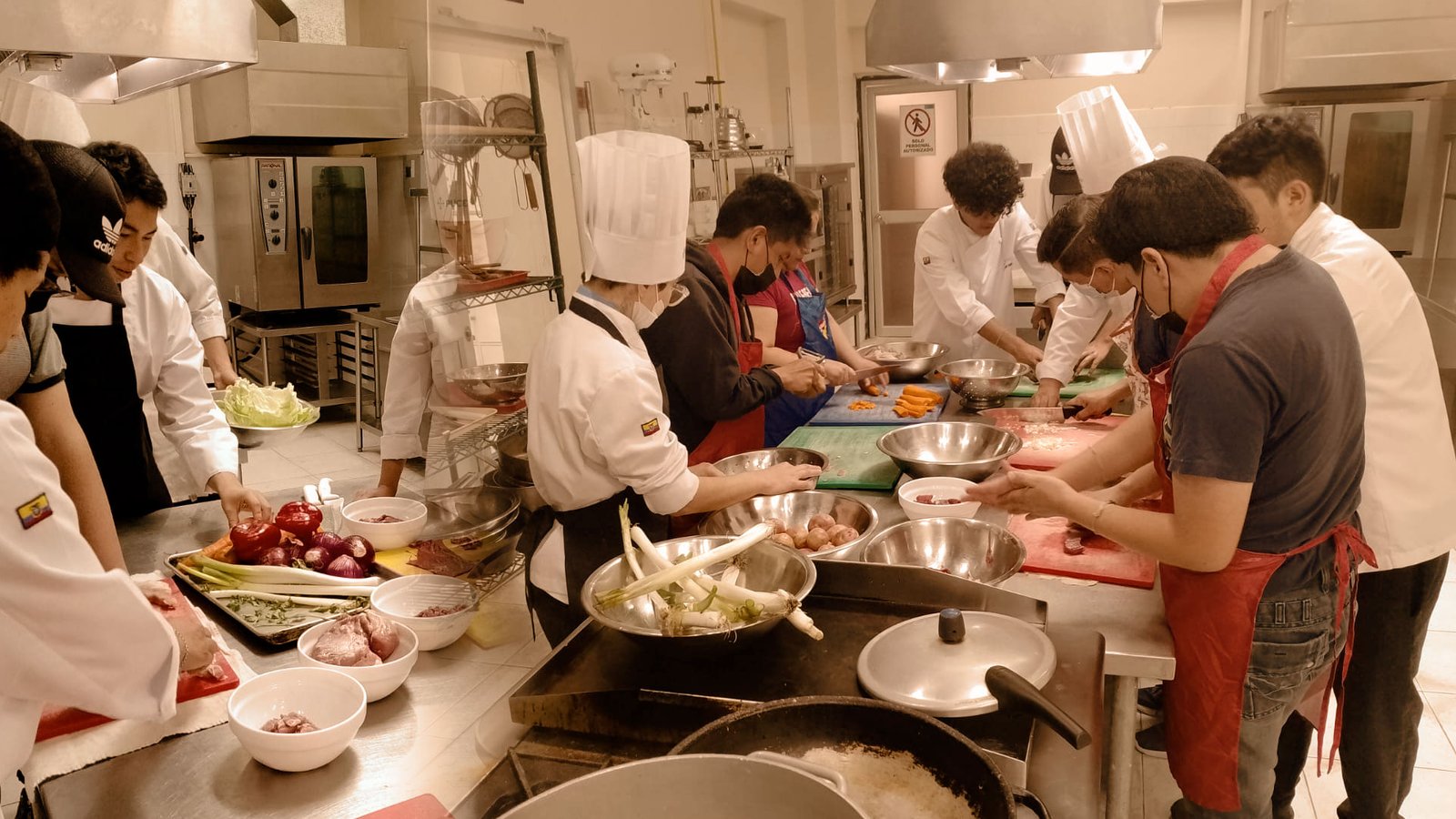
This article examines the impact of an inclusive pastry course designed for people with disabilities, implemented at the Pontificia Universidad Católica del Ecuador – Ibarra, with the aim of evaluating how adapted teaching strategies fostered the development of technical skills and soft skills. The course, which took place between February and March 2022, included the participation of seven individuals with various disabilities, such as cerebral palsy, autism, intellectual disability, schizophrenia, and visual impairment. It was taught by an instructor with the assistance of four gastronomy students as tutors. The methodology used was qualitative, with an exploratory and descriptive approach. Techniques such as interviews, direct observation, and a field diary were employed, along with instruments like interview guides and observation sheets. The sample included all course participants, as well as the tutors and instructor. The results indicate that the group developed twelve preparations, including pizzas, donuts, colada morada with guaguas de pan, alfajores, croissants, and cookies, among others. Furthermore, the course not only facilitated the learning of technical pastry skills but also contributed to the development of essential soft skills, such as communication, teamwork, patience, creativity, and problem-solving, both in the students and the tutors and instructor. Progress in soft skills reflected an improvement in social interaction and the integration of participants into the educational process. Finally, it is concluded that adapted and inclusive environments are essential to ensure the full inclusion of people with disabilities in educational and work contexts, highlighting the importance of designing accessible and inclusive spaces
Downloads
References
Castro, A., & Aguirre, M. (2020). Educación inclusiva en la gastronomía: adaptaciones curriculares para estudiantes con discapacidad en Ecuador. Revista Latinoamericana de Educación Inclusiva, 19(2), 130-145. Recuperado de https://revistas.udec.cl
González, S., Martínez, C., & Rodríguez, P. (2021). Tecnologías de apoyo y educación inclusiva: una propuesta para la enseñanza de gastronomía en jóvenes con discapacidad. Revista Colombiana de Educación Especial, 22(1), 91-104. Recuperado de https://revistas.ucolombia.edu
Gutiérrez, A. (2018). Educación inclusiva: Diversidad y prácticas pedagógicas. Ediciones Pedagógicas.
Johnson, R., Brown, L., & Davis, K. (2021). Cooking up success: The impact of culinary training on young people with disabilities in Australia. Journal of Special Education and Learning, 14(3), 85-95. https://doi.org/10.1016/j.jsel.2021.05.006
López, A., & Sánchez, P. (2020). La pastelería como herramienta educativa inclusiva: un análisis de programas educativos en España. Revista Española de Educación Inclusiva, 28(1), 56-68. https://doi.org/10.6018/reei.441202
Mertens, D. (2021). Inclusive culinary education: Opportunities and challenges for students with disabilities. Journal of Educational Research, 53(3), 140-151. https://doi.org/10.1080/00220671.2021.1937401
Pérez, S., & Martínez, C. (2022). La inclusión educativa en el ámbito gastronómico: estudio de caso en Colombia. Journal of Disability and Education, 30(1), 70-82. https://doi.org/10.1016/j.jde.2022.03.004 DOI: https://doi.org/10.1016/j.jde.2022.03.004
Pérez, M., & Martínez, C. (2021). La inclusión educativa y su impacto en la formación profesional de jóvenes con discapacidad. Revista de Investigación Educativa, 27(3), 52-67.
Pérez, M., & Rivera, D. (2022). Pastelería inclusiva: Un estudio sobre la implementación en Imbabura. Revista Imbabura de Educación, 15(2), 102-110. Recuperado de https://revistas.puce.edu.ec
Ramírez, C. (2022). Impacto de un curso de pastelería inclusiva en jóvenes con discapacidad en Imbabura. Journal of Inclusive Education Studies, 20(3), 45-56. https://doi.org/10.5367/jies.2022.021234
Rodríguez, F., & Hernández, L. (2023). La importancia del aprendizaje colaborativo en la formación de jóvenes con discapacidad en gastronomía: un estudio en Imbabura. Revista de Innovación y Educación, 29(4), 34-40. Recuperado de https://revistas.imbabura.edu.ec
Torres, J., & Rodríguez, M. (2021). La gastronomía inclusiva como estrategia educativa en México. Revista de Educación Inclusiva, 18(2), 113-126. https://doi.org/10.6084/m9.figshare.1496021
UNESCO. (2009). Política educativa inclusiva: Un enfoque global. Recuperado de https://unesdoc.unesco.org/
Vega, F. (2022). Educación inclusiva y habilidades socioemocionales: Un análisis desde la gastronomía. Revista Latinoamericana de Educación Inclusiva, 19(2), 52-67.
Downloads
Additional Files
Published
License
Copyright (c) 2024 Juan C. Echeverría, S. Lorena Arellano

This work is licensed under a Creative Commons Attribution 4.0 International License.
You are free to:
Share — copy and redistribute the material in any medium or format
Adapt — remix, transform, and build upon the material for any purpose, even commercially. The licensor cannot revoke these freedoms as long as you follow the license terms.
Under the following terms:
Attribution — You must give appropriate credit, provide a link to the license, and indicate if changes have been made. You may do so in any reasonable manner, but not in any way that suggests the licensor endorses you or your use.
No additional restrictions — You may not apply legal terms or technological measures that legally restrict others from doing anything the license permits.